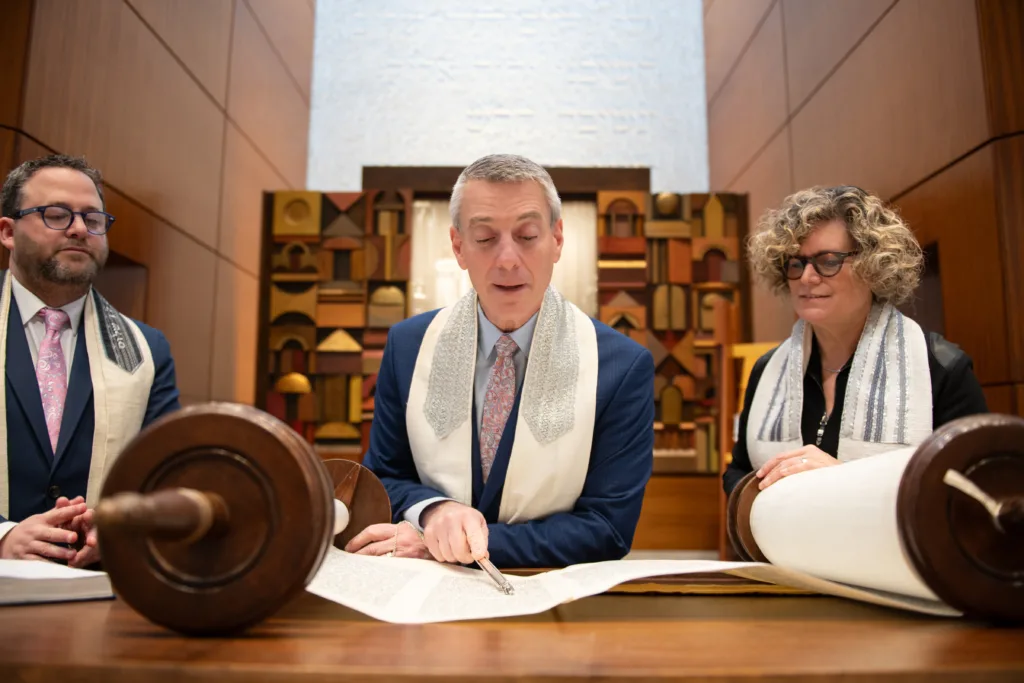
Rabbi Ron Segal
In case you missed the announcement, last week President Trump issued a proclamation calling upon Jewish Americans to observe this weekend, May 15-16, as a “National Sabbath.” The proclamation frames the requested observance as recognition of “the countless contributions of Jewish Americans” to U.S. history and culture, timely considering America’s ongoing 250th anniversary celebration. While some may deem a presidential call for Jewish religious practice to be peculiar, many understand the President’s proclamation as a timely and important gesture of solidarity, at a time when concerns about rising antisemitism throughout the U.S. continue to plague the Jewish community.
Last week’s proclamation was explicitly issued as part of “Jewish American Heritage Month” (JAHM). Of historical interest, JAHM is the result of another presidential proclamation, established in 2006 by President George W. Bush, following unanimously approved congressional legislation. The stated intentions of JAHM, “to honor 350 years of contributions of Jewish people to American society” (based upon the anniversary of the first organized Jewish community in New Amsterdam), are clearly echoed in the National Sabbath proclamation.
Still, we need to go back even another quarter century to read the first Presidential proclamation concerning the Jewish community when, in 1980, Congress authorized President Jimmy Carter to proclaim April 21-28 as “Jewish Heritage Week.” As explained in that proclamation, Jewish Heritage Week aimed “to educate the public on the contributions of Jewish Americans to American culture, science, government, and society, as well as to combat antisemitism.” And from 1981 through the early 2000s, each successive U.S. President continued to issue the Jewish Heritage Week proclamation.
Regardless of the time in which each proclamation was issued, or the motivations that informed its release, drawing national focus to the affairs and practices of the Jewish community is an intriguing topic that warrants conversation and shared reflection. As such, a question for personal consideration: “What do you think about Presidential proclamations drawing attention to the Jewish community, Jewish contributions, and Jewish practice?” If interested in weighing in, please post your anonymous comments and reflections here. Remember that the question is about the proposition, not the personality behind the proclamation, so thank you for keeping comments respectful and apolitical.