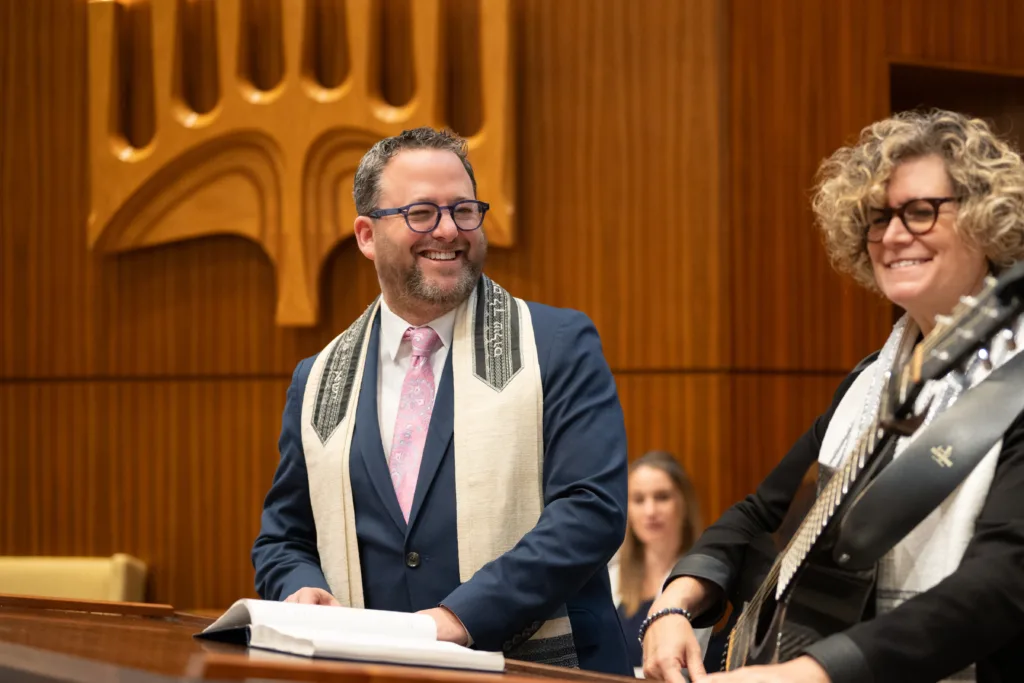
Rabbi Brad Levenberg
There’s a detail in our Torah portion this week, Parashat Emor, that’s easy to miss if you’re reading quickly. When the Torah introduces the festivals, they aren’t just listed. The wording handed down through the generations in Leviticus 23:2 reads: “These are the appointed times… which you shall proclaim.”
That last phrase matters may be the very key to understanding Judaism in 2026.
We don’t just observe sacred time; we proclaim it. We call it out. We decide, in real time, that this moment is different. Which means that holiness, at least in part, isn’t only built into the calendar; it depends on our willingness to recognize it and say something out loud about it.
That’s a challenging idea, for sure, because most of our lives don’t feel particularly “proclaim-able.” They’re busy, they’re routine, they’re quite often populated with moments that are forgettable. Even meaningful things can slip by without much notice because we’re already onto the next thing.
But Emor pushes in a different direction. It suggests that part of our spiritual work isn’t waiting for big moments to arrive. Rather, it’s developing the instinct to name the ones that already are.
So here’s the question I’ve been sitting with this week: What in your life right now deserves to be marked, even if no one else would think to mark it? I’m not referring to the obvious milestones. I’m thinking about something smaller. Something that, if you don’t name it, will pass without acknowledgment.
And what would it look like to actually say it out loud, even just to yourself: this matters.
Because the Torah’s claim is pretty clear. Sacred time isn’t only given; it’s declared. And if we don’t do the declaring, a lot of what matters most simply disappears into the blur of everything else.
May this be a Shabbat filled with proclamation. And then may we find within it a sense of shalom.