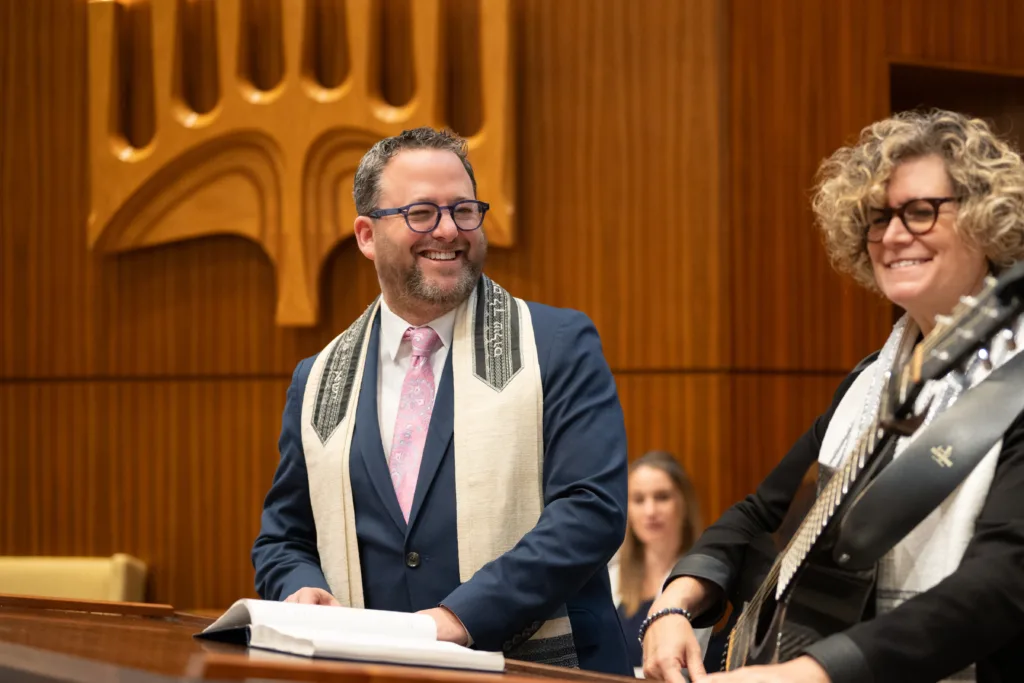
Rabbi Brad Levenberg
As we move on from Passover, we enter a deeply meaningful period on the Jewish calendar known as the Counting of the Omer. Beginning on the second night of Passover and continuing for forty-nine days, we mark each evening with a simple blessing and a number, counting our way toward Shavuot, the festival that celebrates the giving of the Torah. At first glance, it can feel like an obscure ritual, a daily tally that seems easy to overlook. And yet, within this practice is a powerful invitation: to pay attention to time, to recognize that each day matters, and to understand that who we become is shaped not only by big moments, but by what we do in between them.
The Omer sits between two defining experiences in Jewish life. Passover tells the story of liberation, of leaving Egypt and breaking free from what held us back. Shavuot tells the story of revelation, of standing at Sinai and receiving a sense of purpose and direction. The days in between are not an afterthought; rather, they are the bridge. Freedom, our tradition teaches, is not the end of the journey. It is the beginning of responsibility. Each day we count becomes a step in that movement, from being released to becoming ready, from leaving something behind to building something new.
There is something striking about the simplicity of the ritual itself. You don’t need to know Hebrew or follow every detail perfectly. You might begin by simply asking: what would it look like to take one moment each day to reflect on how I showed up? What did I learn? Where did I fall short, and where did I grow? The counting becomes less about the number and more about the practice of paying attention to your own life as it unfolds. And then, after that moment of reflection, simply say, to yourself or out loud, “Today is the ___ day of the Omer.”
In a world that often encourages us to rush past our days, this practice interrupts that impulse. It asks us to notice, to mark time with intention rather than letting it blur together. If we can do that, then by the time we arrive at Shavuot, we will not only be marking a date on the calendar, we’ll be recognizing that we have, in some small but meaningful way, prepared ourselves for what comes next.
Shabbat Shalom.