Rabbi Sam Trief
On Monday morning, I returned home from a once-in-a-lifetime trip to South Africa. The first part of my journey was a safari, and the second was an immersive experience in Cape Town with The Joint Distribution Committee.
On our very first day in Cape Town, we visited the Ubuntu Beekeeping Project, a JDC-supported initiative that trains South African women in beekeeping and teaches them how to launch and manage their own honey-production businesses. The women learn how to care for hives and harvest honey, while also developing entrepreneurship and business skills that can help them support themselves and their communities.
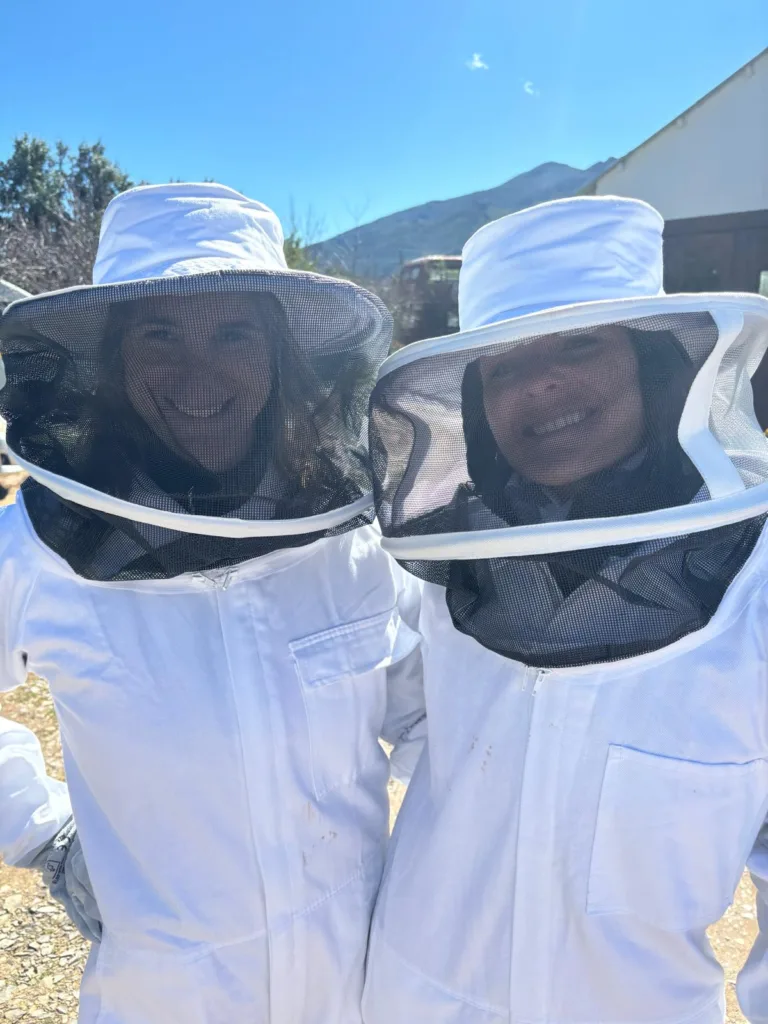
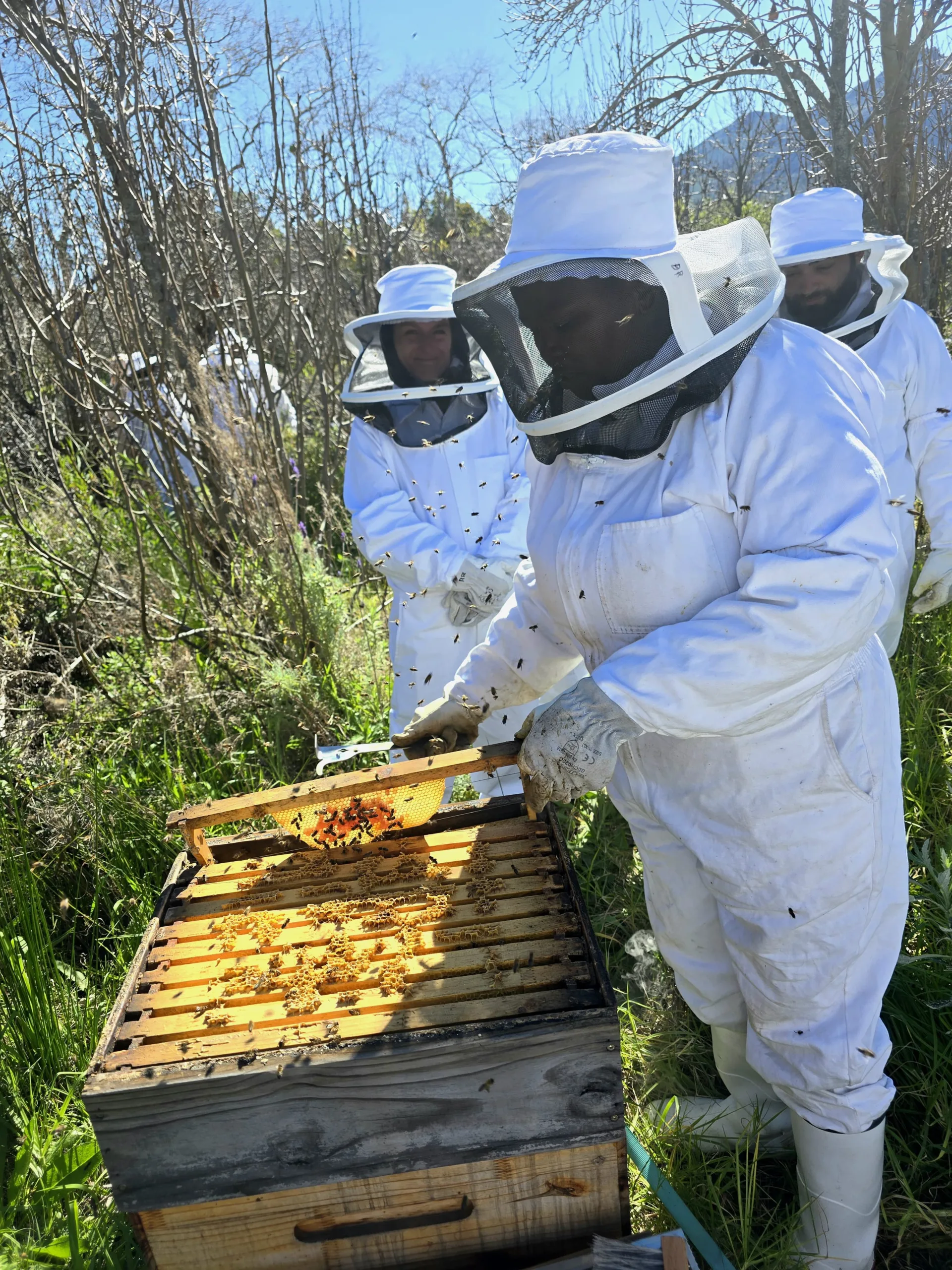
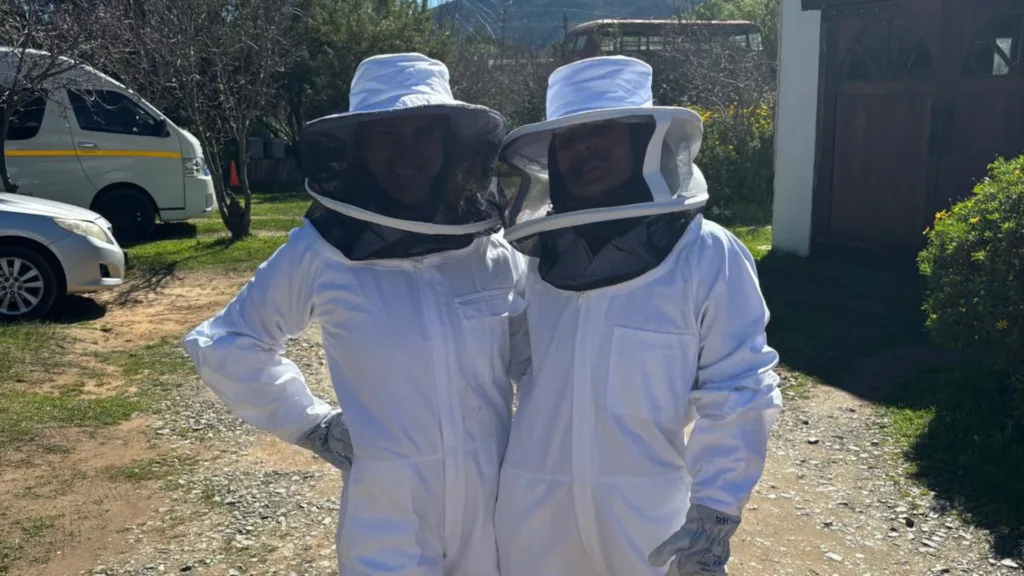
As part of our visit, we had the chance to get up close and personal with the bees.
We put on beekeeper suits, covered ourselves from head to toe, and walked toward the hives. When the beekeeper lifted the lid, suddenly thousands of bees were flying around us.
I could hear them everywhere: flying around my head, landing on my suit, buzzing inches from my face. And I started repeating quietly:
It’s okay. You are safe. Just listen to the humming.
Strangely, after a while, what had initially felt terrifying became almost meditative. I stopped hearing thousands of individual bees and began hearing one collective hum.
Later that evening, when we returned to our hotel, we studied Jewish texts about bees and honey. After spending the morning literally surrounded by bees, I found myself reading these ancient teachings in an entirely new way.
One Midrash we studied, plays with the similarity between the Hebrew word devarim, “words,” and devorim, “bees.” Like a bee, the Midrash teaches, our words have the capacity for both sweetness and sting. A bee can produce something as sweet as honey, and yet that very same creature carries a painful sting.
So too with our words. They can comfort, encourage, heal and bring people closer together. And they can also wound, embarrass and push people apart. Sometimes the difference between the two is only a few words.
Another text we studied, Likutei Halachot, offers an entirely different image of honey. It teaches that honey has a remarkable quality: when another substance remains immersed in it long enough, eventually that substance itself can take on the qualities of the honey.
The text suggests that Torah can work the same way. When we truly immerse ourselves in Torah and its values, we do not simply learn something new. We can become something new. Torah has the power to transform us.
We are approaching the season when honey will soon appear on our tables as we wish one another a shanah tovah u’metukah, a good and sweet new year. But maybe the invitation of Elul is not simply to hope that the coming year will be sweet. Maybe it is to ask how we might become sweeter.
Can the words we speak have a little less sting and a little more honey?
Can we immerse ourselves more deeply in Torah, community, prayer, kindness so that they actually change us?
This is some of the work of Elul: not simply wishing for sweetness in the year ahead but thinking about the sweetness we ourselves can bring into it.
I learned so much during my time in South Africa, and I can’t wait to continue sharing what I experienced and learned with our Sinai family. Shabbat Shalom!