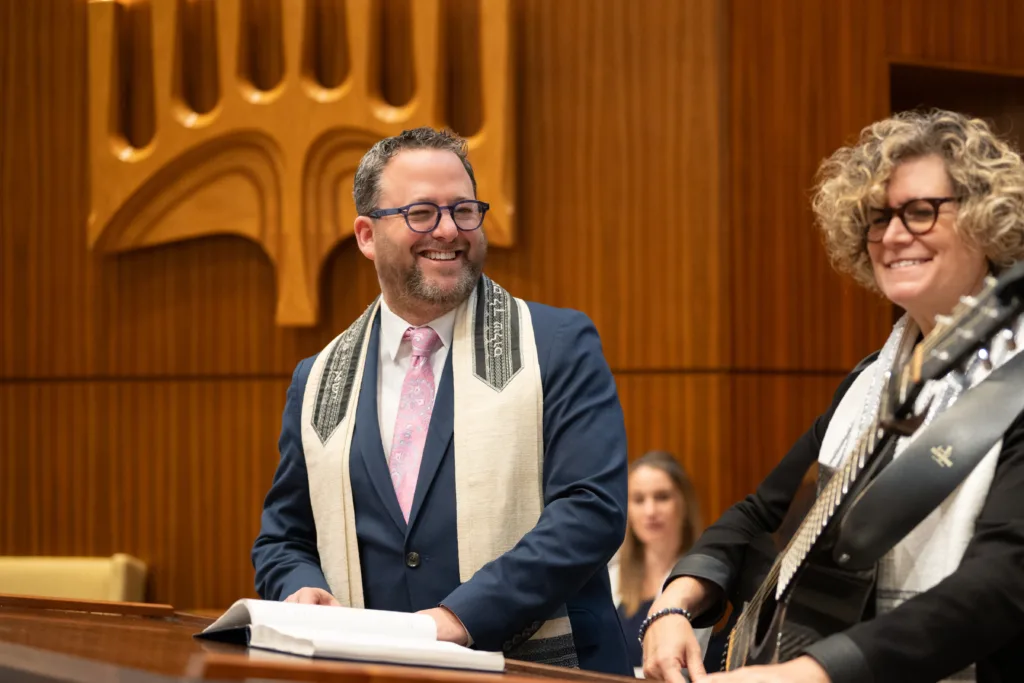
Rabbi Brad Levenberg
As we move into Shabbat, we do so with full hearts and unsettled spirits. The news from Israel and the broader Middle East arrives in waves, with each headline carrying its own weight. There is uncertainty about what comes next, concern for those in harm’s way, and a deep ache for families whose lives are suspended between waiting and worry.
We hold especially close the military personnel of the United States armed services as well as the soldiers of the Israel Defense Forces as they are called to responsibilities that most of us can barely imagine. We pray for their safety, for moral clarity in moments of strain, and for strength of spirit alongside physical protection. We also pray for the innocent people who long for quiet skies and the simple dignity of daily life.
This week’s parashah, Ki Tisa, places our ancestors in a moment of crisis. The people, frightened by Moses’ delay atop Mount Sinai, fashion a Golden Calf. Their fear turns into impatience, their impatience leads to poor judgment, and a fragile community teeters on the edge. Yet the story doesn’t end there. Moses returns from the mountaintop. He confronts the people, he intercedes on their behalf, and he ascends once more, ostensibly to go from a place of brokenness to wholeness. From rupture comes the possibility of repair, and we who know the story know that new tablets are carved and the covenant is renewed. In this way, Ki Tisa reminds us that there are times when we experience the unsettling of the break, even as we pray and look to the time of repair.
As we enter this Shabbat, may it offer us steadiness. May we draw strength from our tradition’s insistence that the brokenness we experience now need not be final. And may this conflict come to a timely end in a way that leaves Israel secure and our world closer to the peace our prayers describe each week: Oseh shalom bimromav—May the One who makes peace in the high heavens bring peace to us, to all Israel, and to all who dwell on earth.
Shabbat Shalom.